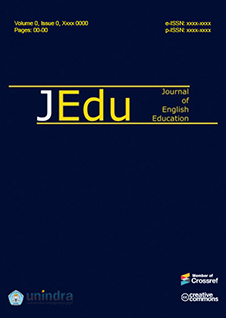
AN ANALYSIS OF SIGN LANGUAGE FEATURES USED BY HONG HEE-JOO IN KOREAN DRAMA 'WHEN THE PHONE RINGS'
DOI:
https://doi.org/10.30998/jedu.v6i1.806Keywords:
Sign Language Features, Korean DramaAbstract
The underrepresentation and inaccurate portrayal of sign language in media challenge inclusivity and accessibility for those with hearing impairments. Media heavily influences public perception of marginalized groups. This research analyzes HongHee-Joo's sign language in “When The Phone Rings” and compares Korean Sign Language (KSL) and American Sign Language (ASL). Using content analysis and William Stokoe's (1960) theory, it examines five features: handshape, palmorientation, location, movement, and facial expression. Results show Hong Hee-Joo uses these features, with variations across episodes. The study also highlights differences in features between KSL and ASL, reflecting cultural backgrounds. It enhances understanding of media representation of sign language and the need for accurate portrayals of the deaf community. Future research should explore sign language in other media and audience perceptions to understand social and cultural impacts.
Downloads
Downloads
Published
Issue
Section
License
Copyright (c) 2026 Handi Pabriana, Yandika Febriyana, Anisa Septya Megawati (Author)

This work is licensed under a Creative Commons Attribution 4.0 International License.